Cut Costs, Keep Talking: The Easy Move to Modern Internet Phone Systems
If you run a business, that classic desk phone on your employees’ desks is about to become history. The world of business communications is undergoing a massive, non-negotiable shift, moving away from old physical copper wires and toward flexible, digital internet connections.
This change is complicated because it involves swapping out that old Phone exchange system Pabx for a smart new one, and turning your call center into a super-efficient machine. You need a guide to manage this entire process, making sure all your technology talks to each other perfectly. That's the crucial job of an expert system integrator like Talinda East Africa
Here is a simple look at what’s changing, why you need to move now, and how these new systems work.
1. The Death of the Copper Wire: Why You Must Move
That big, clunky PABX systems box in your server room runs on the Public Switched Telephone Network (PSTN)—old copper phone lines. The companies that run these lines are shutting them down. In major markets, they stopped selling new services in September 2023, and the final switch-off is expected by January 2027.
The takeaway: If you don't switch your phone system, you won't be able to make or receive calls after the deadline.
The replacement is IP Telephony systems. These use Voice over Internet Protocol (VoIP) to send your voice as digital data packets over your existing internet connection.
Financial Shift: You swap the big upfront cost (CapEx) of that old Phone exchange system PABX box for a simpler, pay-as-you-go subscription cost (OpEx) for a Cloud call center solution.
2. The New Digital Office Phone System
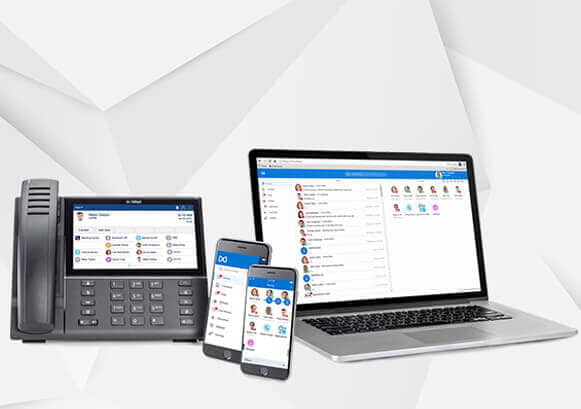
When you move to IP Telephony systems, you upgrade to an Office telephone solution IP PBX. This is essentially a smart, internet-based phone switch that handles all your communications.
Smart Phones, Smart Savings: Your team will use IP Phones that plug into the internet, or even softphones (apps on their computer or mobile phone). This setup means internal calls between offices are free, and international calls are much cheaper. Modern Panasonic Phones and other IP Phones offer crystal-clear HD audio and features like voicemail-to-email.
Freedom to Move: Staff can use Wireless IP Phones—like Dect phones—to walk around the office or campus while staying connected, or they can work from home using their desk number on a softphone app.
3. The Modern Call Center: Smarter Service, Smarter Sales
The specialized Contact center solutions used today are split into two groups, and both rely on serious software intelligence:
System Type | Core Function | Goal |
Inbound Call Centers | Takes incoming calls for support, billing, or technical help. | Building relationships and providing excellent customer service. |
Outbound Call Centers | Makes outgoing calls for sales, lead generation, or research. | Maximizing reach and making sales. |
Getting the Right Agent: These systems use Best Call centers software systems that feature "Skills-Based Routing." Instead of just sending a call to the next available person, the system sends a Spanish-speaking customer with a billing question directly to an agent with high scores in both Spanish and accounting, increasing the chance of solving the problem the first time (First Call Resolution).
Automation is Key: Old interactive phone menus (IVR) that forced you to press 1, then 3, then 2 are being replaced by AI Voice Bots. These bots use Generative AI to understand what you say naturally ("I want to pay my bill") and can solve complex issues or look up data without ever needing a human agent, saving the business huge amounts of money.
The Outbound Rules and Compliance
For sales, Auto dialers for call centers are used to boost efficiency by automatically dialing numbers. However, this comes with legal risk.
Compliance: To use automatic dialing software, especially for marketing to mobile phones, you must have the customer's Prior Express Written Consent.
DNC: All Outbound and inbound call center systems must check their lists against the National Do Not Call (DNC) Registry—a list of over 241 million numbers—to avoid massive fines.
We ensure that your sales operation uses compliant systems and processes, managing the necessary list scrubbing and documentation to keep your business safe from costly regulatory violations.
4. Seamless Conversations: The Omnichannel Experience
A few years ago, a business might have had a separate team for phone calls, a separate system for emails, and a separate app for chat. This is called "multichannel," and it's frustrating because you have to repeat yourself when you switch channels.
Today, the standard is the Omnichannel call center. This means all those channels are linked. If you start a chat online and then call in, the agent on the phone instantly sees the entire chat transcript—no repetition needed.
Connecting the Dots: Achieving this requires deep Technology Integration Services. The Cloud call center software must be wired directly to your Customer Relationship Management (CRM) tools (like Dynamics 365) to create a "single source of truth" for all customer data, speeding up how fast agents can resolve cases.
The Engine: This integration is possible because modern Best Call centers software systems are built using small, independent digital components called Microservices that communicate via APIs (Application Programming Interfaces). This architecture allows for simple, rapid connection to any other business software.
5. Specialized: The Hotel Phone System
In places like hotels, the telephone system does much more than just connect calls. The Hotel telephone system PaBX, is a crucial business tool.
Integration is Everything: The system must integrate with the hotel's Property Management System (PMS), which handles reservations and billing. Using special protocols (like FIAS), the phone system automatically:
Activates the guest room phone upon check-in and deactivates it (for security) upon check-out.
Automatically posts phone call charges and minibar charges to the guest’s final bill.
Allows housekeeping staff to use the room's Hotel house phones analog lobby emergency devices to update the room's cleaning status in the PMS by dialing a simple code.
Safety First: While staff can use advanced Hotel IP Phones, safety is critical. Because internet phones (VoIP) can make it difficult to reliably track a person's physical location for 911 services, Emergency phones (often simple analog ones) must be maintained in fixed locations like lobbies to guarantee the precise location is sent during a crisis.
Talinda makes sure that your specialized systems—from the Hotel IP Phones to the old analog emergency lines—all communicate perfectly with the billing system, ensuring both smooth operations and guest safety.